
How Other People Experience Anxiety
If you asked my friend Ruth what anxiety feels like, she’d tell you this:
“It’s like a sense of doom.
Like something BAD is about to happen any minute now. And there’s nothing you can do to stop it, because you don’t even know what it is.
Every time you enjoy life, a panicky feeling creeps in, because you’re sure the universe is about to serve you something awful to ‘balance it out.’
You worry all the time. You worry about your family, about paying bills, about some hidden disease you don’t even know you have.
It’s a horrible state to be in.”
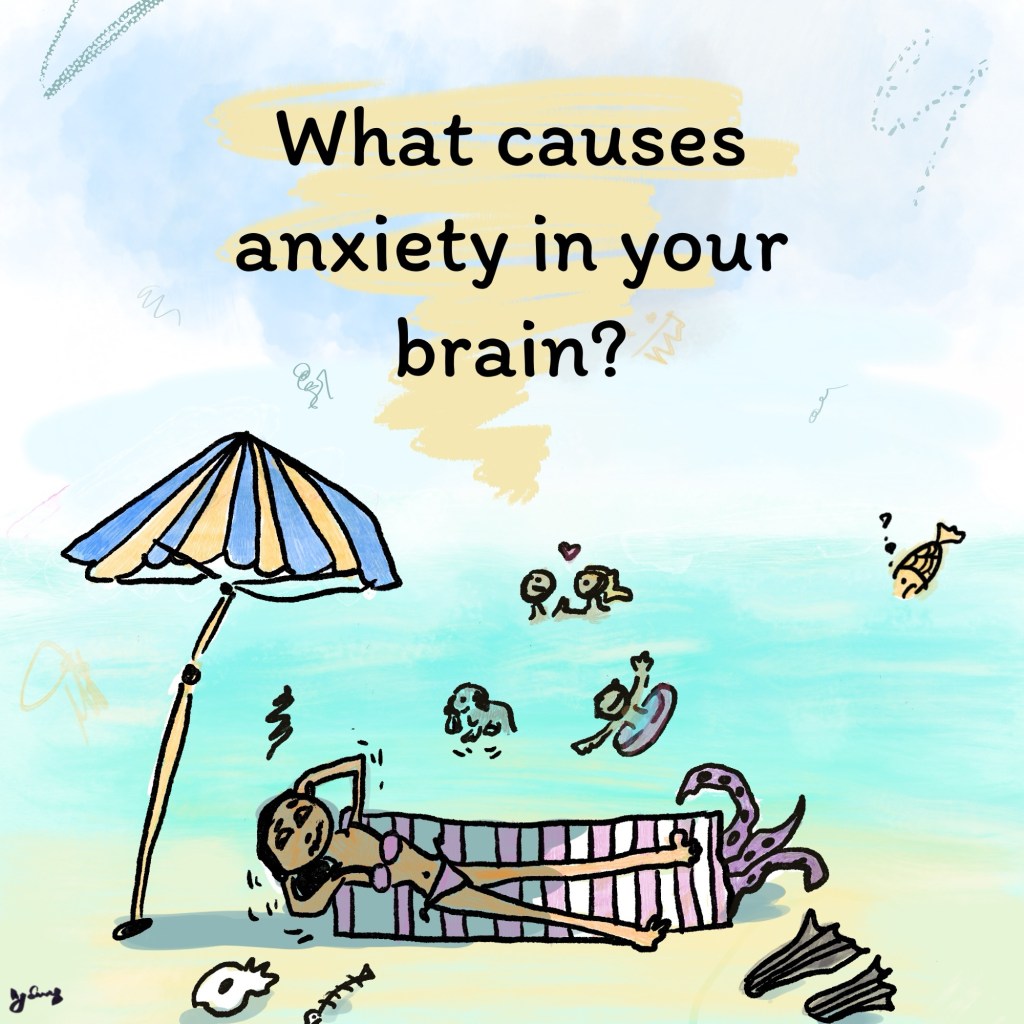
That’s anxiety. It feels like being stuck in “fight or flight mode”, except that there is no danger.
And it shows up differently for different people. Some live with Generalized Anxiety Disorder (GAD), where they feel anxious almost all the time. Others feel it mostly in social situations. Some develop phobias, (like fear of snakes, spiders, or flying).
When anxiety gets really strong, many people experience panic attacks – intense episodes of uncontrolled fear. During a panic attack, people often:
- feel their heart racing
- start shaking
- struggle to breathe
- notice their blood pressure rising
- feel restless and jittery
- worry they might die
Pretty terrifying, especially when there’s no real threat in sight.
So if there’s no danger, why does the brain react like there is?
Why Your Brain Experiences Anxiety
There is a tiny part of your brain, called the amygdala or also known as “the fear centre”. It’s the bit that fires up whenever you sense danger, whether it’s a real threat or just something your mind thinks might be dangerous.
Fear itself is useful.
It’s your brain’s way of shouting “DANGER!” so you can either fight or run away. That’s how humans have survived for thousands of years.
But here’s the tricky part: sometimes the amygdala becomes overly sensitive to stimuli. It starts going off when there’s no real reason. And when that happens too often, anxiety shows up.
Anxiety can develop when:
- your amygdala is constantly activated (like when you’re under nonstop stress at work or stuck in a toxic relationship);
- you’ve gone through a traumatic event (a divorce, death, a car accident, losing your job);
- you have a medical condition (for example, thyroid issues);
- you’ve abused substances – alcohol, drugs, heavy smoking or too much coffee change your brain chemistry. Stimulants disrupt your neurotransmitter balance, causing you mood instability and anxiety.
All of these things can make your brain’s fear centre hypersensitive.
That’s why, to get rid of the awful feelings of constant worry, you need to heal your brain.
How to Heal Your Brain and Get Rid of Anxiety
First things first – check with your doctor. Rule out any medical issues or side effects from medications.
Once that’s clear, here’s what really helps:
- Cut out stimulants. Easier said than done, I know. But you can’t expect to feel mentally strong if you’re smoking, drinking, or using drugs regularly. Even coffee can stir up anxiety – try limiting it to one cup a day. If quitting smoking feels impossible, start with small steps (see the smoking section for tips);
- Start taking supplements – most people suffer from poor nutrition. Especially if alcohol, cigarettes, or poor diet are part of the picture. Deficiencies that often worsen anxiety include: vitamin D3 (especially if you don’t get much sun); omega 3 fatty acids (for mood and brain function), magnesium (calms your nervous system); L- theanine – (an amino acid in green tea that promotes relaxation); vitamins B6, B9 and B12 – all important for mood stability;
- Fix your sleep – Your brain needs deep sleep to function. Poor sleep wrecks your brain. If you’re tossing, turning, or waking up tired, your brain isn’t repairing itself. Over time this leads to stress, foggy thinking, and, you guessed it, more anxiety. Create a healthy sleep environment: dark and well-aired. Consider supplements like melatonin, valerian, or passionflower. You should notice dramatic changes in your sleep and wellbeing in just weeks.
- Start doing aerobic exercises at least 3 times per week – Anxiety is often just excess energy bottled up inside. Cardiovascular exercises don’t have to be running on a treadmill. You can go jogging, swimming, jumping rope, dancing, or a fitness class like step, zumba, spinning, etc. Why should you do this? Cardio increases oxygen and nutrient flow to your brain and even stimulates new brain cells through a protein called brain-derived neurotrophic factor (BDNF). Neurogenesis is crucial for learning, memory, and brain health. Plus, it triggers endorphins, which is why you always feel so good after a workout!
- Eat an “anti-anxiety diet” – There are certain foods that can improve your brain health and mood stability. I’ve written more about anxiety-friendly foods here.
- Spend as much time outside as you can – Too much screen time is a modern anxiety trap. Nature heals. See how digital addiction is ruining your life and how to beat it.
Dealing With Past Trauma, Stress, and Phobias
Sometimes anxiety isn’t about what’s happening now, it’s about something scary that happened in the past.
Your amygdala remembers the trauma and keeps setting off false alarms whenever something reminds you of it. A loud bang, a certain smell, even a random situation can trigger the same fear response.
It’s important to realise what happened is in the past.
And here’s the truth: you survived it.
You came out stronger.
If something similar happened again, you’d be even better prepared to handle it.
If you are under constant stress at work, don’t ignore it. Burnout is real and dangerous. See what burnout does to you and why should you prevent it.
Taking action to change your work environment can ease anxiety more than you might think.
What are your experiences with anxiety?
Read more:
How to stick to a routine with anxiety
How to beat anxiety by quitting smoking forever
TheThinkAbout is a website based on psychology in practice and experience.
Like the articles? Subscribe to never miss anything.
Your contribution matters! If you find this website helpful, please support our work. Thank you for visiting!
 The think about
Leave a comment