

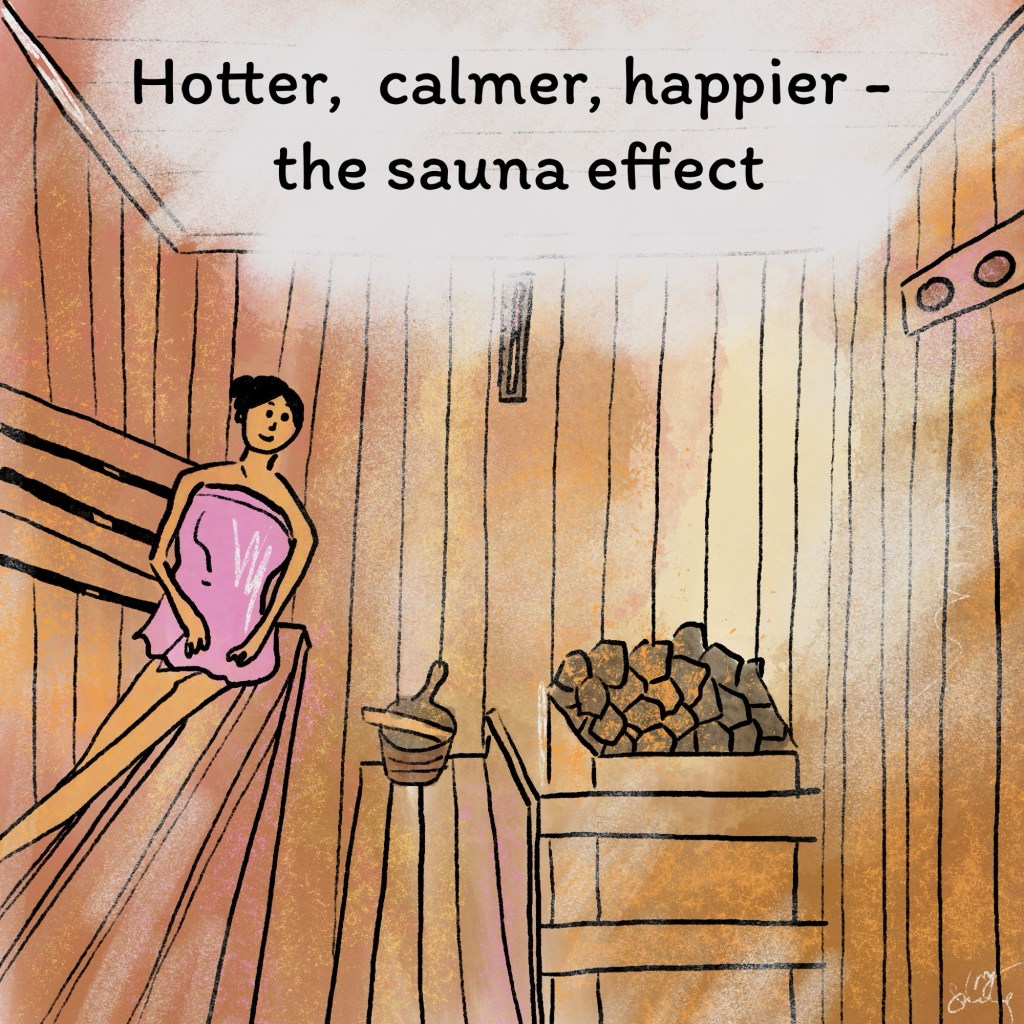
When October is almost gone, you can feel winter knocking on your door
Days become shorter, the sun is weaker, and your body’s rhythm naturally starts slowing down, seeking warmth and comfort.
In this article, I talked about the importance of maintaining a regular exercise routine so that you remain physically and mentally energized even during the fall and winter seasons. But to really tune in with the season, there’s nothing more comforting than relaxing in a hot sauna.
Especially if you have a regular workout schedule, a hot sauna is exactly what your muscles need.
The other day, I had a free workout night.
I usually do four days of high-intensity step aerobics with three days of hatha yoga, but this Wednesday, I didn’t have anything in my schedule.
So I decided, why not try the sauna? I hadn’t been to the sauna since last winter.
I spent a good 15 minutes in there, and when I finally took a shower and lay down in the relaxation area, it felt like my mind and body were floating in paradise.
That specific evening, there were many kids in the spa, as it was close to the pool and the kids were taking swimming lessons, so you can imagine the spa area was not exactly a “relax zone” at that time.
But my brain was so relaxed, I just smiled and lay on my bed, surrounded by the dim lights of the salt lamps.
Turns out, it was exactly what my body needed. I finished with a 10-minute steam bath session, and my brain was literally bathing in endorphins for the rest of the evening.
What do sauna and steam bath do to your body?
Don’t you feel there’s something oddly comforting about sitting in a box designed to make you sweat like you’ve just run from your problems?
You can try a dry Finnish sauna or a steamy Turkish bath, but the effect is the same: heat, release, and surrender.
The benefits of the sauna aren’t just physical.
Sure, your muscles unclench, your skin glows, and your circulation improves. But the real magic is what happens in your head. The heat slows down not only your heartbeat but your thoughts as well, making you forget the endless to-do lists in your mind.
Your nervous system finally stops bracing for impact in the fog of warmth.
Saunas and steam rooms both trigger a stress response that teaches your body to recover faster. The short bursts of heat act like exposure therapy, making you better at handling stress. They lower cortisol, boost endorphins, and simply make you feel good for no apparent reason.
Steam baths are their own kind of therapy.
The moist heat opens your lungs so you can breathe easily. It’s grounding, almost meditative. The air presses softly against your skin and reminds you that you’re here, embodied, and not just a floating brain in worry soup.
In a world obsessed with productivity, it’s strangely rebellious to sit in silence for twenty minutes.
You come out lighter because, even for a brief moment, you let go.
Of course, the sauna doesn’t solve your problems, but it hands you back to yourself so you can act with more clarity and purpose.
If you regularly work out, saunas and steam rooms are perfect for muscle recovery.
The heat gets your blood moving, flushes toxins out of your body, and eases your muscle tension.
Some people even find that consistent sauna use improves endurance because your body gets used to managing heat stress, so when you’re pushing through that last set, your system already knows how to keep its cool.
Some useful tips when using the sauna
If you want to make going to the sauna a part of your self-care, it’s better to do it right. The sauna isn’t a competition, and your body will appreciate it if you come prepared.
- Bring a big bottle of water. You’re losing fluids fast and risk dehydration if you don’t drink enough water. You can also sip herbal tea before or after; it helps your system rehydrate gently.
- Leave your phone outside. Don’t check emails or “document the vibe.” When I was at the sauna, some guy was even playing poker on his phone, and the whole relax zone could hear it. The moment you bring a screen into a sauna, it stops being a sanctuary and turns into a sweaty waiting room.
- Start slow. Ten minutes might be plenty at first. The goal isn’t to prove you can do it; it’s to train your nervous system to trust heat as rest. If you feel lightheaded or your heart starts racing, step out, cool off, and try again later.
- Skip the ice-cold shower shock afterwards, unless you’re sure your body can take it. A lukewarm rinse does the job without stressing your heart. Sit quietly for a few minutes and let your pulse come back to normal before leaving.
- Go in freshly showered so the heat works with your skin, not through a layer of perfume and makeup. Bring a towel to dry yourself and another one to sit on in the relax area.
The whole point of visiting the sauna isn’t endurance. It’s relaxation. The heat does the heavy lifting; your only job is to let go.
How long should you sit in a sauna?
For most people, 10–20 minutes works perfectly fine.
It’s long enough to relax your muscles, release endorphins, and calm yourself, but short enough not to overdo it.
If you’re new to saunas, start with 8–10 minutes and build up gradually.
Your body needs time to get used to the heat. Listen to it: if you start feeling dizzy, nauseous, or like your heart’s racing too fast, step out right away.
After you cool down and rehydrate, you can go back in for another round if you want.
Many people do two or three short sessions with breaks in between.
Just remember that the real key is consistency. A few balanced sessions a week are the perfect finish for your self-care routine.
The benefits of sauna on your motivation and productivity
Sauna sessions aren’t just about releasing tension; they actually change how your brain and body handle stress, rest, and motivation.
Regular sauna use can help your nervous system switch out of fight-or-flight mode faster, so you recover from daily stress more efficiently.
Your sleep quality improves. The post-sauna cooldown signals your body that it’s time to rest, which improves your quality of sleep. Better sleep equals a better mood and sharper focus.
On the motivation side, sauna use gives you small but consistent hits of accomplishment.
It’s a simple, repeatable ritual that can lift you up on days when your drive feels low. The heat exposure also triggers mild stress adaptation, which trains your brain to stay calm under pressure.
You become more resilient and can focus much better when you work or do a workout.
Sauna therapy boosts your productivity.
When your body feels rested and your mind is less reactive, it’s easier to start things, finish things, and think clearly in between.
The sauna is the perfect tool for emotional reset, rest, and mental clarity, all the stuff that affects your productivity and ability to reach your goals in life. So why don’t you try it today?
Want to read more?
Learn the cause of sudden depression
How to get your motivation back when you see no results
Why some people succeed in life and others don’t?
The only way to permanently stop smoking
The secrets of charismatic people
Best food diet if you have anxiety
TheThinkAbout is a website based on psychology in practice and experience.
Like the articles? Subscribe to never miss anything.
Your contribution matters! If you find this website helpful, please support our work. Thank you for visiting!
 The think about
Leave a comment