

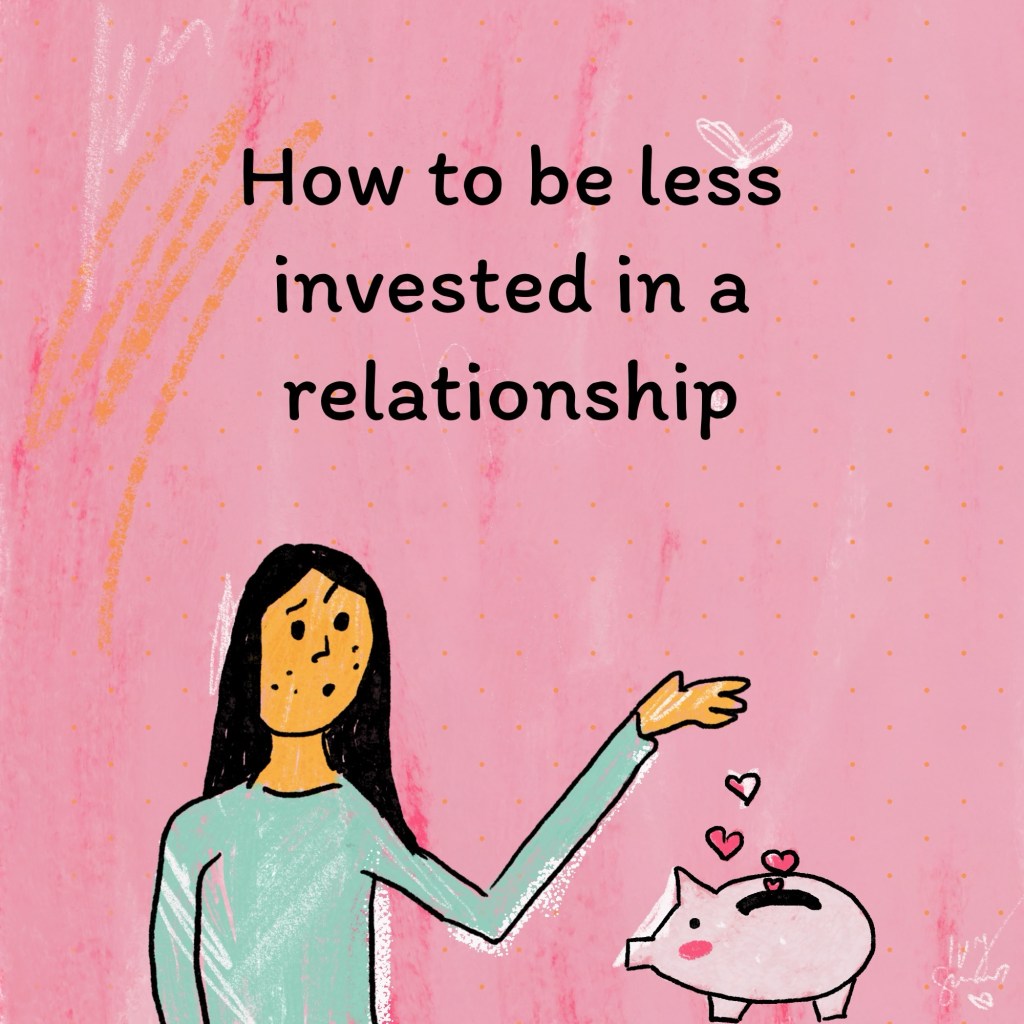
Ugh…did this happen again?
Have you noticed that you tend to give more than you receive in your relationships?
Perhaps your partner has been pulling away or acting distant, which led you to this article.
So, you met someone new. At first, everything was great – they were attentive, caring, and took the initiative. But over time, they started pulling away, leaving you doing all the effort. Maybe you:
- text first 90 % of the time
- call more often than they call you
- feel you constantly need more time together
- initiate most dates
- complain about their lack of attention and affection
- feel they’re too lazy to make an effort
And now you might be thinking: “Why does this always happen to me?”
If this sounds familiar, you might have a pattern of over-investing in relationships.
Relationships are NEVER perfectly 50/50
It’s normal for one partner to give a little more than the other, but it should balance out over time – sometimes it’s you, sometimes it’s them.
The important thing you need to know is – the more you give, the more value you place on the other person. And the more attached you become. Attachment makes you dependent and causes you to give away your power.
And here is what happens next:
- You may tolerate bad behavior because you believe they’re “too valuable” to lose.
- The more attached and needy you are, the more you suffocate them, lowering your value.
- They sense this neediness and often pull away, leaving you frustrated.
Power in Love
In relationships, it’s often the less emotional and more detached partner who holds the power.
The basic formula:
More invested = Needy = Weak = Unsexy
Less invested = Detached = Powerful = Sexy
If you feel powerless or taken for granted in your relationship, you need to stop over-giving your time, attention, and energy. Detach slightly, focus on yourself and your own life. Recognize the vicious circle: the more you give, the less you take.
And the less your partner gives – the less they value you.
What motivates someone to make an effort in relationships
People enter relationships to satisfy needs for intimacy, comfort, security, and sex.
The motivation to “give” often comes from a desire to make the other person like them and secure the relationship. By doing so, they ensure they continue to experience happy hormones and have their needs met over time.
However, our brain is wired for laziness.
It constantly looks for ways to conserve energy. So, if you give someone everything they need, why would they feel motivated to put in effort?
The key is this: if you don’t LET your partner contribute, you’re doing all the work for them. Every time you notice yourself over-investing, stop immediately and restore balance.
These principles below apply both to:
- New relationships, where you may invest too much too soon
- Existing relationships, which may have become imbalanced over time
Why “talking about it” doesn’t work
Many people think that having a heart-to-heart conversation will solve imbalance in a relationship. You might feel the urge to tell your partner:
“I feel like I’m doing more than you. I’d like you to make more effort.”
Don’t do it. It rarely works, and here’s why.
The Myth of “They Just Don’t Know”
We often assume that if our partner isn’t treating us well, it’s unintentional, that maybe they just need a reminder.
The truth is – if someone already wanted to do it, they would be doing it!
Asking them to do something from a weak position won’t change their behavior. It only sets the stage for arguments and frustration.
The only way someone will truly put in effort is if they want to do it themselves. It has to feel like their idea. Otherwise, you’ll keep repeating the same conversations with little progress.
How to achieve this?
Through your actions.
As Shakespeare once said:
“Actions speak louder than words”.
What to do if you invest too much in your relationship
If you know that bingeing on sweets gives you diabetes, what do you do?
You don’t eat sweets, right?
Well, you can’t avoid relationships. But you can reduce your dependency on them, if you know you over-attach too easily.
The first step is to become a more confident person.
The second is to put on the brakes and intentionally invest less.
By investing less you achieve two things:
- You make your partner work for you = they invest more = they value you more
- You stop putting them on pedestal = you stay independent and don’t become emotionally dependent on them
How to actually invest less and let your partner do more
Don’t talk about the future
Avoid making long-term plans like trips next year, living together, marriage, or kids.
Focus on enjoying the present moment with them. If the connection is real, discussions about the future will happen, but don’t be the one to initiate them.
Don’t take the initiative to move in or leave half your things at their place
Many people, especially women, leave items at their partner’s home thinking it will make them miss you.
The opposite happens: by leaving your things where they live, you start seeing their home as “yours”, even if you don’t technically live there.
You attach more, while they may feel less need to commit. Often, having your belongings around makes it feel like you’re “always there,” yet they still maintain their sense of freedom.
Give them the space to miss you.
Maintain your independence and let them take the next step.
Don’t spend all your time with them at the expense of your friends
In the early stages, it’s tempting to spend EVERY free moment together, but by over-prioritizing your partner, you subconsciously program your brain that they are too valuable to let go.
Maintain your social life – don’t always turn down friends’ invitations or feel obligated to bring your partner along.
You also don’t have to do everything together. When you go out and have fun, avoid obsessing about what they’re doing in the meantime.
Having your own life preserves your independence and prevents your partner from taking you for granted.
Don’t do stuff to take the pressure off your partner
It’s perfectly fine to do nice things for your partner occasionally to show you care.
But never start acting like their parent. Over-investing this way creates imbalance and emotional dependency.
Women often over-invest by:
- Cooking elaborate meals for hours
- Cleaning their partner’s apartment
- Doing their laundry
- Monitoring if they ate, slept, or are okay
These gestures aren’t inherently bad, but should generally be reserved for married life or at least cohabitation. (And even then, you shouldn’t overdo it.)
Men often over-invest by:
- Paying all rent and bills
- Living together too soon
- Driving her everywhere
- Buying her expensive gifts they can’t afford
- Covering every dinner or outing
Don’t talk way more about their interests and less about yours
Of course, it’s important to take an interest in your partner’s hobbies and passions.
Just don’t treat their interests as inherently more important than your own. Be open about what you enjoy and never give up your hobbies for the sake of the relationship.
When you make their interests the center of your attention, you’re signaling that their life matters more than yours. This can create imbalance and over-attachment. (If you have an anxious attachment style, you can read strategies on how to become more secure here).
If you struggle with asserting yourself, check out How to become a more assertive person.
Don’t act more affectionate than they do
Avoid initiating hugs, kisses, or sex all the time, and don’t constantly send love emojis if they don’t reciprocate.
Don’t respond immediately to every message, avoid sending long paragraphs, and never double-text.
You may underestimate the importance of this, but it’s not about playing mind games. It’s about protecting yourself from investing more in someone than they are willing to invest in you.
Call and text less than they do
Make it a habit to let them initiate more often, even if it’s just slightly more.
Don’t over share
Avoid telling your partner too soon things that no one else knows about you, never be an open book.
Trust takes years to build, and unless you’ve been together for at least three years, there’s no reason to share your most intimate details.
Sharing is investing your trust.
It makes you vulnerable and can create a strong desire to hold on to someone, even if they’re not good for you.
Never chase them when they pull back
If someone is being distant, for reasons other than health, work, or a serious personal issue, never chase them. You don’t need anyone who ignores you or doesn’t value you enough.
Let them be. If they show disinterest, let that naturally reduce your interest as well.
No person is more important than yourself.
Remember: relationships should complete your life, not complicate it.
By learning to invest less until you’re sure the other person truly values you, you preserve your independence, self-respect, and personal power.
One last thing
The strategies mentioned above work well when your partner is emotionally healthy, caring, and committed. Often, all it takes is some effort on your part to improve the relationship.
But if nothing seems to work, it might be worth learning what it feels like to be in a relationship with a narcissist.
Did a bad breakup bring you to this page? Get the How to get over your ex in 30 days ebook.
See also:
Why men stop appreciating their girlfriends
How to not be destroyed by a breakup
The exact thing you need to do if your ex wants you back
“My ex blocked me on everything! What now?”
TheThinkAbout is a website based on psychology in practice and experience.
Like the articles? Subscribe to never miss anything.
Your contribution matters! If you find this website helpful, please support our work. Thank you for visiting!
 The think about
Leave a comment