
Contributed to Aristotle’s idea of:
“Fake it till you make it.”
Ever wonder why certain things keep repeating in your life?
You attract the same type of partner over and over.
Money always seems scarce, even after a raise.
The reason might be simple: you’re subconsciously running the same patterns, but expecting different results.
How Subconscious Beliefs Are Formed
Your brain is bombarded with information every second.
The conscious mind can only handle so much, it focuses on what’s immediately important. Everything else gets filtered into the subconscious mind, stored away to be processed later.
This subconscious storage shapes your:
- Thoughts
- Emotions
- Behaviors
- Perceptions
…often without you realizing it.
Over time, repetition and conditioning turn those stored patterns into subconscious beliefs.
For example: Repeated negative messages about money – deep-seated belief that “money is always scarce.” Constant exposure to toxic relationship dynamics – subconscious expectation that “love = conflict.”
This programming doesn’t happen by choice. It happens by exposure: media, advertising, repeated experiences, affirmations, and even the way you talk to yourself.
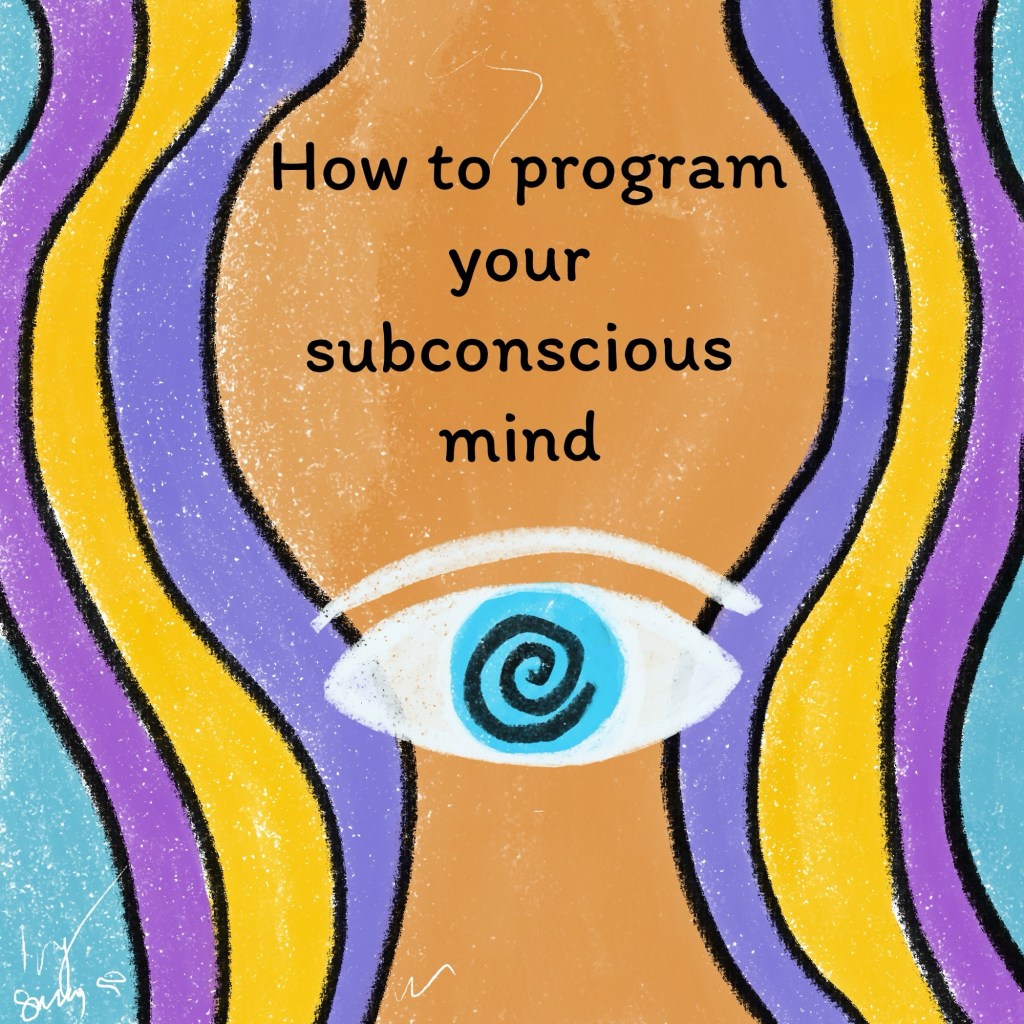
How to Reprogram the Subconscious Mind
Here’s the truth: telling yourself “I can do this” isn’t enough.
Why?
Because if your subconscious is running on an old, negative program, your conscious pep talk won’t stick. Your brain will always default to the deeper belief. So the real challenge is this: how do you plant a new belief directly into the subconscious?
“Fake It Till You Make It”
You’ve heard the cliché a thousand times:
- Fake it till you make it.
- Dress for the job you want, not the job you have.
- You attract what you are, not what you want.
- As within, so without.
They all point to the same truth: act as if, and reality will follow. In other words: thoughts become things.
The reason you may fail over and over at being more confident, social, fit, or wealthy isn’t that you’re incapable, it’s that your subconscious is still running a script that says: “This isn’t who I am.” Until you change that script, your conscious efforts will always hit a wall.
How Faking It Reprograms Your Subconscious
“Fake it till you make it” isn’t just a cheesy slogan, it actually works, and here’s why.
When you consistently act confident or capable (even if you don’t believe it at first), you set off a chain of powerful psychological processes:
- Cognitive Dissonance: When your actions and beliefs don’t match, your brain hates the conflict. If you keep acting confident, your subconscious will eventually shift its beliefs to line up with your behavior.
- Conditioning: Repetition rewires your brain. Each time you “fake it,” you’re carving new neural pathways. Over time, those pathways strengthen, and the behavior stops being fake, it becomes natural.
- Positive Feedback Loop: Acting confident often attracts positive reactions from others. That external validation reinforces your belief in yourself, creating a snowball effect of growing confidence.
- Emotional Regulation: Confidence feeds good feelings. Even if you’re faking it, acting bold can spark emotions like pride and accomplishment. Those positive emotions attach themselves to the new behavior, gradually overwriting old negative beliefs.
Your subconscious doesn’t care if you’re “pretending.” With enough consistency, it simply takes the hint and updates the script.
The Results of Acting “As If”
Let’s take Pete as an example.
Pete just landed a new sales job. The problem? He’s nervous, self-conscious, and far from confident. But he knows one thing: in sales, confidence is everything. So, he decides to act as if he already has it.
Here’s what Pete does:
- body language – Pete stands tall, makes eye contact, and uses open gestures to appear approachable, even if he feels shaky inside.
- positive self-talk – Instead of spiraling into doubt, he tells himself: “I’m capable of learning and improving. I have skills that matter.”
- polishing communication – Pete practices speaking clearly in front of the mirror, sharpens his tone of voice, and stays enthusiastic with customers, even when he doesn’t have all the answers.
- learning – He studies successful salespeople, mirrors their techniques, and picks up what works to build his own style
At first, Pete is just pretending. It’s all a game. But here’s the twist: people around him start to believe it. They see him as confident, capable, and trustworthy.
And slowly, Pete starts to believe it too. His skills improve, his confidence grows, and his sales results prove it.
What started as “faking it” becomes his new reality. A self-fulfilling prophecy in action.
The Self-Fulfilling Prophecy Loop
To achieve anything in life, you need motivation.
To keep motivation high, you need faith in your abilities.
Faith in yourself grows stronger with positive feedback from others.
And when you project confidence and competence, even if you’re still learning, you’re far more likely to convince both others and yourself that you can do it.
This mental “programming” pushes you to work harder, overcome obstacles, and keep going until you succeed. That’s how confidence fuels effort, effort creates results, and results build even more confidence.
A self-fulfilling prophecy that transforms your life.
Was this helpful?
More on personal development:
The secrets of highly attractive people
How video games can reduce your anxiety
TheThinkAbout is a website based on psychology in practice and experience.
Like the articles? Subscribe to never miss anything.
Your contribution matters! If you find this website helpful, please support our work. Thank you for visiting!
 The think about
Leave a comment