

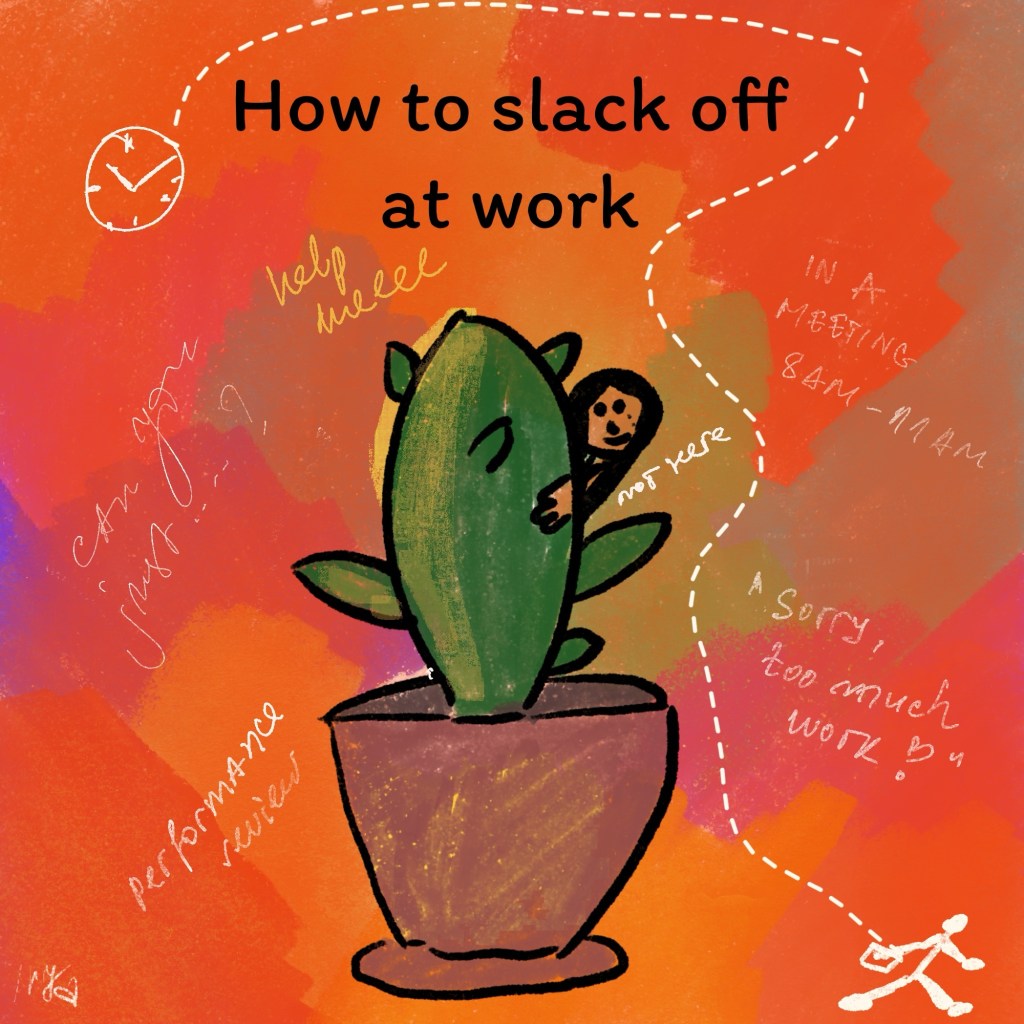
Are you happy in your workplace?
“I’m sitting here at my office desk thinking – why the hell am I doing this job?”
— Anonymous guy on Quora
It may sound counterintuitive, but slacking off at work isn’t laziness – it’s a defense mechanism.
Against what, you ask? Against a work culture that brainwashes you into believing:
- You must grind 40+ hours a week to survive.
- Busywork equals productivity.
- Endless meetings have “value.”
- Your worth depends on your job title.
- You should thank your boss for underpaying you.
Sound familiar? Welcome to:
"Modern employment" — a 30-year-long endurance test in fluorescent lighting.If You Really Hate Your Job – Quit
If you wake up every morning dreading your workplace, get out. Life’s too short to spend years in misery, trading your energy for peanuts and fake smiles.
If you want to be successful, you’ll have to work hard – either for yourself or for someone else’s dream.
If you hate your current job but not the work culture, find a better one.
If you hate both – be bold, fire your boss, and monetize your passion.
When Quitting Isn’t Smart
Sometimes you can get stuck in a job you really hate but can’t afford to quit.
You may have a loan, a family to support, or you were just unlucky to pick a profession that is generally underpaid.
Don’t lose hope – there is still a way out of this!
Sometimes, quitting isn’t realistic, not yet, anyway.
Maybe you’ve got bills, kids, or a degree in a field that pays less than a used toaster.
Don’t panic – there’s still a way out.
You have two paths:
- Start a side hustle and grow it until you can quit.
- Acquire new skills and outcompete everyone else.
But until then, you need to survive the system, with your sanity intact.
And if your job is draining your life force, here’s your permission slip to not play fair.
How to Avoid Working (and Get Away With It)
- Always come and leave on time
If you’re going to slack, do it smart. Don’t draw attention.
Show up, leave on time, and never let anyone think you’re slacking, even when you are.
- Act busy
Keep moving around the office with some papers in hand.
Look slightly stressed 80% of the time.
Eat at your desk once or twice a week.
These are the subtle social signals of a “busy” person, and they should convince even the most sceptical of your colleagues that you are overwhelmed with work.
- Decline extra requests gracefully (until they stop)
Here’s the rule: The more you work, the more they’ll dump on you.
Don’t say “no” directly, that makes people defensive. Instead, try this:
“Sure, I’ll get to it when I finish this.”
Then never get to it.
Every office needs a hero. Just make sure it’s not you.
- Be kind, not close
Smile. Listen. Be pleasant, but mysterious.
Let people talk about themselves (they’ll love you for it), but never share too much.
As Maya Angelou said:
“People will forget what you said, but never how you made them feel.”
Make them feel good, but never familiar.
- Keep a low profile
Do your lunch breaks solo when you can.
If someone invites you out, use harmless excuses:
- “Dentist appointment.”
- “Post office run.”
- “Too much work.”
- “Seeing a friend for lunch.”
Once in a while, join a lunch so you don’t seem antisocial, just “busy.”
- Skip company events
Team-building exercises are traps. They’re HR’s way of collecting data and gossip. (See more reasons why HR is often unreliable).
Never refuse directly, just get “sick” last minute or say your cousin’s visiting from Spain.
- Befriend the right people
Strategically align with useful allies.
Know someone in IT (they control your digital freedom).
Have a friend in HR or Legal – for early warnings and insider info.
- Make management like you
Appear proactive, not over-eager. Ask smart questions, look engaged in meetings, and time your visible productivity for when it matters.
Work smart, not hard.
- Keep your desk busy, not messy
A cluttered desk screams “slacker.” A clean desk screams “not working.”
The sweet spot? A busy-looking desk – neatly stacked papers, half-highlighted notes, and a sticky note or two.
- Qualify for the job you want and dream
Here’s the most important thing: don’t waste your slacking.
Use it to study, upskill, or build your escape plan.
Take an online course. Learn a language. Plan your business.
Every minute you secretly invest in your future during company time is a small act of rebellion, and self-respect.
Final Thought
Slacking off at work isn’t about avoiding responsibility, it’s about preserving your energy for something that actually matters when you’re trapped in a toxic workplace that you can’t afford to quit.
So if you’re quietly plotting your escape from cubicle life – good. You’re not lazy. You’re evolving.
Found this valuable?
What are your strategies to slack off at work? Check out also:
The effects of burnout at the workplace
Why you shouldn’t trust your HR
Why people slack off at work and quiet quit
TheThinkAbout is a website based on psychology in practice and experience.
Like the articles? Subscribe to never miss anything.
Your contribution matters! If you find this website helpful, please support our work. Thank you for visiting!
 The think about
Leave a comment